How and Why Crypto Services Collect Your Personal Data: A Review of 85+ Platforms and Their KYC / Low-KYC Flows
KYC in crypto means the identity checks that exchanges, wallets, and on-ramp services use to confirm who you are. Depending on the flow, that can mean your name, address, date of birth, government ID, selfie, proof of address, or source-of-funds information.
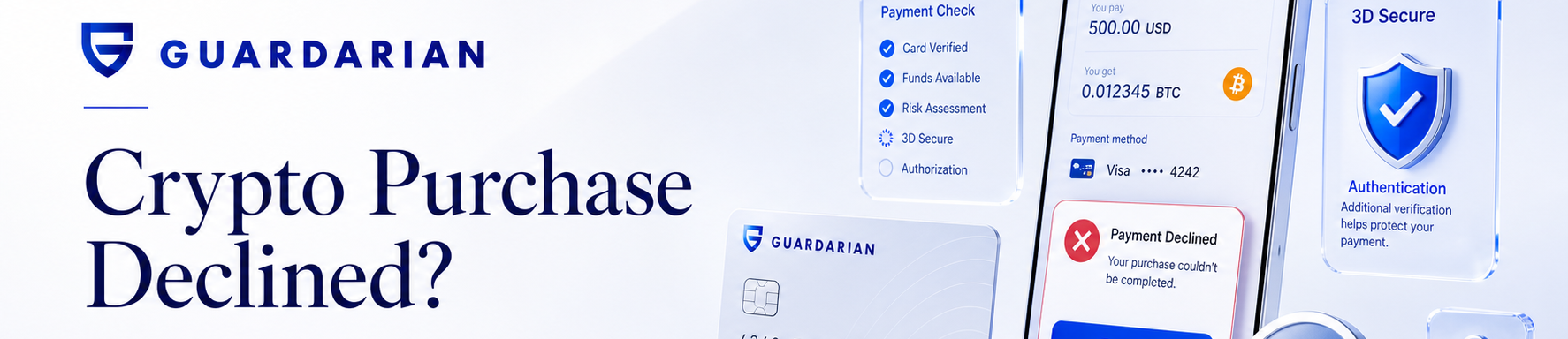
Most users do not object to security checks in principle. What frustrates them is finding out too late. They choose a coin, enter an amount, type in card details, and only then discover that the next step is a passport upload and selfie check.
We reviewed more than 85 crypto services to see how they explain KYC, when they ask for personal data, and how many publicly describe a lighter route for eligible purchases.
The headline finding is simple: low-KYC is still rare. Across the broader sample, only five services clearly describe a low-KYC or no-immediate-ID route. That is about 6% of the market we reviewed. Among direct fiat-to-crypto on-ramps, the share rises to 15.6%.
The data below is based on public provider pages, help centers, KYC documentation, developer docs, product pages, and terms. No account creation or private access was used.
What personal data crypto services collect during KYC
KYC, or Know Your Customer, is the process financial services use to confirm the identity of their users. In crypto, it often becomes the gate between a user and a fiat-to-crypto purchase.
The exact data request depends on the provider, user country, payment method, transaction size, and risk signals. In practice, crypto KYC can include:
Email and phone verification
Full legal name and date of birth
Residential address
Government-issued ID, such as a passport, driver’s license, or national ID
Selfie or liveness check
Proof of address, such as a utility bill or bank statement
Source-of-funds questions
Wallet risk screening
Not every provider asks for all of this at once. Some checks are triggered by transaction size, payment method, country, wallet risk, or repeated behavior. Others require full identity verification before the user can do anything meaningful.
The short answer: because fiat payment rails are regulated.
When someone buys crypto with a credit card, debit card, bank transfer, or local payment method, the transaction touches financial infrastructure with anti-money laundering, counter-terrorist financing, sanctions, fraud, and payment-risk obligations. Crypto services inherit many of those requirements from regulators, payment partners, banks, card networks, and local law.
Reason
What it means in practice
AML / CTF compliance
Reduces money laundering and terrorism financing risk
Fraud prevention
Helps stop stolen cards, fake identities, account abuse, and chargebacks
Payment risk management
Protects card, bank, and local payment rails
Local regulation
Applies country-specific financial requirements
Risk monitoring
Adds stronger checks when transaction risk increases
KYC is not going away in regulated fiat-to-crypto flows. The real question is not whether checks exist. It is whether the provider explains them clearly and asks for only what the transaction requires.
What we mean by low-KYC
In this review, low-KYC means a crypto purchase flow where eligible users may start with lighter verification instead of full identity checks upfront.
It does not mean no checks ever. In regulated fiat-to-crypto flows, providers may still run AML, fraud, payment, sanctions, wallet, device, country, or transaction-risk checks in the background. Additional verification can still be requested when the order, payment method, user location, wallet risk, local law, or repeated behavior requires it.
For this review, we counted a provider as low-KYC only when it publicly described a lighter or no-immediate-ID route for eligible transactions.
We built a sample of more than 85 crypto services across direct on-ramps, off-ramps, centralized exchanges, wallets with built-in buy flows, payment providers, P2P marketplaces, swap services, aggregators, and infrastructure layers.
Each provider was reviewed through public-facing material: KYC and AML pages, help centers, developer documentation, product pages, and terms of service. We did not create accounts or use private access.
The results: low-KYC is still rare
Category
Count
Share
Low-KYC confirmed
5
~5.9%
Borderline / tiered KYC
4
~4.7%
Full KYC / KYC-first / unclear
60+
Majority
Aggregators / wallets / infrastructure
15+
Separate category
Among the 32 direct fiat-to-crypto on-ramp providers we checked, five clearly described a low-KYC route. That puts direct on-ramp low-KYC availability at 15.6%.
The five confirmed low-KYC crypto services
Service
Type
What makes it low-KYC
Guardarian
Direct on/off-ramp
Low-KYC is the practical version of what many users are looking for. Eligible orders can move through a lighter checkout without unnecessary proof-of-address or selfie checks, while AML, payment, device, and wallet screening still run in the background.
Transak
Direct on/off-ramp
Multi-Level KYC with a Lite KYC tier
Mercuryo
Direct on/off-ramp
Light KYC under €700 when no suspicious behavior is detected
Mt Pelerin
Exchange / on-off ramp
Exchange without ID up to CHF 999/month, excluding card payments
Paybis
Direct buy crypto
Possible crypto purchase without immediate ID verification depending on limits and risk factors
Guardarian uses a risk-based low-KYC flow: eligible smaller or lower-risk orders can move through a lighter checkout without unnecessary proof-of-address or selfie checks, while AML, payment, device, wallet, and repeated-order screening may still run in the background.
Additional verification may still be requested when risk signals appear, including transaction size, payment method, user country, wallet risk, local rules, repeated behavior, or suspicious activity.
That is the realistic promise: not zero checks, but fewer visible checks when the purchase does not need them.
What this means for users
The main problem is not that crypto services collect data. The problem is that users often do not know what data will be collected, why it is needed, when verification will appear, whether a purchase is eligible for a lighter flow, or what can trigger additional checks.
For users, the better experience is not “no compliance.” It is clear rules before checkout, proportional verification, and no surprise passport upload after card entry.
How and Why Crypto Services Collect Your Personal Data: A Review of 85+ Platforms and Their KYC / Low-KYC Flows
KYC in crypto means the identity checks that exchanges, wallets, and on-ramp services use to confirm who you are. Depending on the flow, that can mean your name, address, date of birth, government ID, selfie, proof of address, or source-of-funds information.
Most users do not object to security checks in principle. What frustrates them is finding out too late. They choose a coin, enter an amount, type in card details, and only then discover that the next step is a passport upload and selfie check.
We reviewed more than 85 crypto services to see how they explain KYC, when they ask for personal data, and how many publicly describe a lighter route for eligible purchases.
The headline finding is simple: low-KYC is still rare. Across the broader sample, only five services clearly describe a low-KYC or no-immediate-ID route. That is about 6% of the market we reviewed. Among direct fiat-to-crypto on-ramps, the share rises to 15.6%.
The data below is based on public provider pages, help centers, KYC documentation, developer docs, product pages, and terms. No account creation or private access was used.
What personal data crypto services collect during KYC
KYC, or Know Your Customer, is the process financial services use to confirm the identity of their users. In crypto, it often becomes the gate between a user and a fiat-to-crypto purchase.
The exact data request depends on the provider, user country, payment method, transaction size, and risk signals. In practice, crypto KYC can include:
Email and phone verification
Full legal name and date of birth
Residential address
Government-issued ID, such as a passport, driver’s license, or national ID
Selfie or liveness check
Proof of address, such as a utility bill or bank statement
Source-of-funds questions
Wallet risk screening
Not every provider asks for all of this at once. Some checks are triggered by transaction size, payment method, country, wallet risk, or repeated behavior. Others require full identity verification before the user can do anything meaningful.
The short answer: because fiat payment rails are regulated.
When someone buys crypto with a credit card, debit card, bank transfer, or local payment method, the transaction touches financial infrastructure with anti-money laundering, counter-terrorist financing, sanctions, fraud, and payment-risk obligations. Crypto services inherit many of those requirements from regulators, payment partners, banks, card networks, and local law.
Reason
What it means in practice
AML / CTF compliance
Reduces money laundering and terrorism financing risk
Fraud prevention
Helps stop stolen cards, fake identities, account abuse, and chargebacks
Payment risk management
Protects card, bank, and local payment rails
Local regulation
Applies country-specific financial requirements
Risk monitoring
Adds stronger checks when transaction risk increases
KYC is not going away in regulated fiat-to-crypto flows. The real question is not whether checks exist. It is whether the provider explains them clearly and asks for only what the transaction requires.
What we mean by low-KYC
In this review, low-KYC means a crypto purchase flow where eligible users may start with lighter verification instead of full identity checks upfront.
It does not mean no checks ever. In regulated fiat-to-crypto flows, providers may still run AML, fraud, payment, sanctions, wallet, device, country, or transaction-risk checks in the background. Additional verification can still be requested when the order, payment method, user location, wallet risk, local law, or repeated behavior requires it.
For this review, we counted a provider as low-KYC only when it publicly described a lighter or no-immediate-ID route for eligible transactions.
We built a sample of more than 85 crypto services across direct on-ramps, off-ramps, centralized exchanges, wallets with built-in buy flows, payment providers, P2P marketplaces, swap services, aggregators, and infrastructure layers.
Each provider was reviewed through public-facing material: KYC and AML pages, help centers, developer documentation, product pages, and terms of service. We did not create accounts or use private access.
The results: low-KYC is still rare
Category
Count
Share
Low-KYC confirmed
5
~5.9%
Borderline / tiered KYC
4
~4.7%
Full KYC / KYC-first / unclear
60+
Majority
Aggregators / wallets / infrastructure
15+
Separate category
Among the 32 direct fiat-to-crypto on-ramp providers we checked, five clearly described a low-KYC route. That puts direct on-ramp low-KYC availability at 15.6%.
The five confirmed low-KYC crypto services
Service
Type
What makes it low-KYC
Guardarian
Direct on/off-ramp
Low-KYC is the practical version of what many users are looking for. Eligible orders can move through a lighter checkout without unnecessary proof-of-address or selfie checks, while AML, payment, device, and wallet screening still run in the background.
Transak
Direct on/off-ramp
Multi-Level KYC with a Lite KYC tier
Mercuryo
Direct on/off-ramp
Light KYC under €700 when no suspicious behavior is detected
Mt Pelerin
Exchange / on-off ramp
Exchange without ID up to CHF 999/month, excluding card payments
Paybis
Direct buy crypto
Possible crypto purchase without immediate ID verification depending on limits and risk factors
Guardarian uses a risk-based low-KYC flow: eligible smaller or lower-risk orders can move through a lighter checkout without unnecessary proof-of-address or selfie checks, while AML, payment, device, wallet, and repeated-order screening may still run in the background.
Additional verification may still be requested when risk signals appear, including transaction size, payment method, user country, wallet risk, local rules, repeated behavior, or suspicious activity.
That is the realistic promise: not zero checks, but fewer visible checks when the purchase does not need them.
What this means for users
The main problem is not that crypto services collect data. The problem is that users often do not know what data will be collected, why it is needed, when verification will appear, whether a purchase is eligible for a lighter flow, or what can trigger additional checks.
For users, the better experience is not “no compliance.” It is clear rules before checkout, proportional verification, and no surprise passport upload after card entry.